
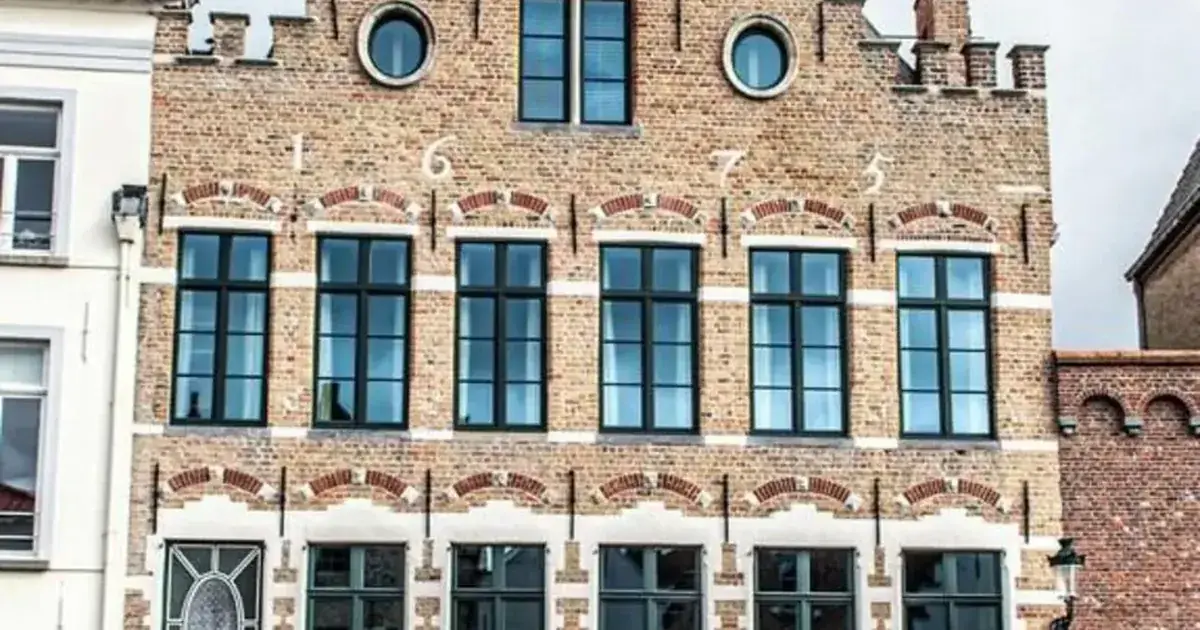
Just ten minutes from the busy Market Square there is another Bruges: a calm, green, working-class neighbourhood of small houses, convents, almshouses, guilds and windmills. Welcome to St Anne’s district (Sint-Anna), the place locals go when the centre gets too crowded. This walk of about 5 km shows you 16 hidden gems in Bruges that most day-trippers never see.
Good to know: Belgian Chocola is located right at the entrance of this district, on the Sint-Annarei canal. It is the perfect start or end point for this walk.
This is walk 3 of our 4 self-guided walking routes in Bruges.
How to get there
From Market Square, walk north via Vlamingstraat to Jan van Eyck Square, then follow the canal (Spiegelrei or Sint-Annarei). The whole walk is flat and works well by bike, too.
16 hidden gems in St Anne’s district
1. House ‘De Rode Steen’ on Jan van Eyck Square
The corner house where Bruges’ “Artistic Restoration” began in 1877. The city gave its first grant to restore old facades in medieval style – a choice that shaped the fairy-tale look of Bruges today and helped make it a UNESCO site.
2. St John’s Square (Sint-Jansplein)
A small square with an 18th-century hand pump that was still used in 1950. The medieval St John’s Church once stood here; it was demolished in the 18th century, but it gave its name to this whole part of the old city – one of the six “sixths” (zestendelen) into which Bruges was divided. Chocolate lovers: the chocolate museum Choco-Story is right here.
3. St Walburga’s Church
The purest Baroque church in Bruges, built in the 17th century for the Jesuits. The architect, Jesuit brother Pieter Huyssens, was inspired by the Il Gesù church in Rome.
4. Spot the statues of Mary
Around three hundred statues of Mary decorate the facades of Bruges. Start counting on the corner of Sint-Maartensplein and Korte Ridderstraat. Mary is the city’s patron saint and also gave the Bruges flag its colours.
5. St Anne’s Church
Do not judge this church by its plain outside. Inside it hides a rich Baroque interior with oak panelling and a huge painting of the Last Judgement – the largest painting in Bruges.
6. Jerusalem Chapel and the Adornes estate
The Adornes family came from Genoa and became one of the richest merchant families of the Golden Age. After Anselm Adornes returned from a dangerous pilgrimage to the Holy Land in 1470, the family built a chapel inspired by the Church of the Holy Sepulchre in Jerusalem. Its eastern-looking tower is unlike anything else in Bruges.
7. Lace Centre
In a former lace school next to the Adornes estate, you can learn how Bruges bobbin lace is made – a craft that once employed about ten thousand women in the city.
8. Annaatje van ‘t Pitje mural
On the corner of Carmersstraat and Kleine Speelmansstraat, a mural tells a local legend: little Anna was thrown into a well on a winter day – and survived because the water was frozen.
9. The English Convent
Behind high walls on Carmersstraat lives a community of nuns since the 17th century, when English Catholics fled to the continent. The domed church and the library can be visited on guided tours.
10. St Sebastian’s Guild (longbow archers)
One of the oldest archers’ guilds in the world, still active today. Kings, queens and princes have visited, and members still shoot in the historic hall and garden.
11. St George’s Guild (crossbow archers)
The crossbow guild has an archery field with a 36-metre-high mast. In the past, archers shot at a live parrot on top of the mast; today it is a block of wood with a feather.
12. House Gezelle
The birthplace of Guido Gezelle (1830–1899), one of the most famous Flemish poets. His family lived in a gardener’s house with a big walled garden that you can still visit.
13. The windmills on the city ramparts
Along the Kruisvest stand the last windmills of Bruges, on a grassy embankment. Sint-Janshuis Mill is still working and can be visited in season. A wonderful spot at sunset.
14. Museum of Our Lady of the Pottery
A former medieval hospital for travellers and the poor, with a beautiful chapel, tapestries and a small “book of miracles”.
15. Oliebaan and Hemelrijk
Walk between old garden walls into Hemelrijk, the only unpaved street in the city centre. Locals once called it “murderers’ street” – nobody knows why. It feels like the countryside.
16. Café Vlissinghe
Finish the walk in one of the oldest pubs in Bruges. Wood panels, old paintings, a garden terrace and a local beer – the perfect reward.
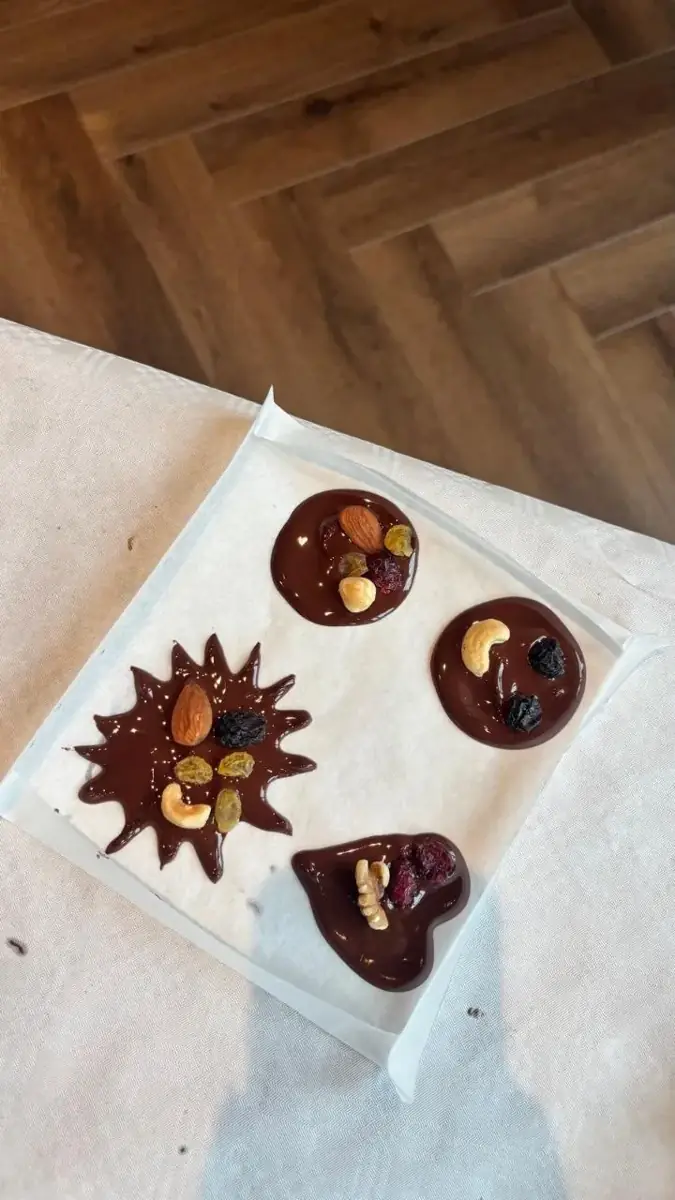
Start your walk with chocolate
Our chocolate workshop is right at the gateway to St Anne’s, at Sint-Annarei 17, in a historic building beside the canal. In about 2 hours you temper Belgian chocolate, make your own pralines and mendiants, and drink a hot chocolate. Then walk off the calories on the ramparts!
More hidden corners in Bruges
- St Giles’ district: the old artists’ quarter where Jan van Eyck and Hans Memling lived.
- Gunpowder Tower park: a tiny park hidden below Lovers’ Bridge at the Lake of Love.
- Small Gothic windows: Bruges has five tiny medieval windows hidden in facades – one is on the Gruuthuse Palace near Boniface Bridge. Can you find the others?
- Bronze scallop shells: about 40 shells in the pavement mark the old pilgrim route to Santiago de Compostela through the city.
Your Bruges roadmap
- Walk 1 – The must-sees
- Walk 2 – Golden Age Bruges
- Walk 3 – Quiet St Anne’s & hidden gems (you are here)
- Walk 4 – Modern Bruges
Frequently asked questions
Where can I avoid the crowds in Bruges?
Head to St Anne’s district, St Giles’ district or the city ramparts. They are only 10 minutes from Market Square but much quieter.
Can you visit the windmills in Bruges?
Yes. You can walk along all of them on the Kruisvest for free, and Sint-Janshuis Mill opens to visitors in season.
How long does the St Anne’s walk take?
About 5 km, or 2.5 to 3 hours with stops.
