Bruges is small enough to explore on foot and so rich in history that the whole centre is a UNESCO World Heritage Site. In one walk you pass medieval squares, Flemish masterpieces, quiet canals and chocolate shops on every corner. Here are the 25 best things to do in Bruges, chosen by a local team that works in the city every day.
Quick answer – the top 5 if you are short on time: climb the Belfry, take a canal boat tour, photograph Rosary Quay, walk through the Beguinage, and make your own Belgian chocolate.
The classic sights
1. Market Square (Markt) and the Belfry
The heart of the city since the 12th century. The Belfry (13th–15th century) is a UNESCO site and a symbol of the city’s freedom and wealth: the city charters were kept here, laws were read from its balcony, and its 47 carillon bells still play over the rooftops. Climb the 366 steps for the best view in Bruges. On the way up you pass the old treasury and the giant music drum that drives the carillon.
On the route: Walk 1, stop 17
2. Burg Square
This is where Bruges began, around a 9th-century fortress built against the Vikings. Today it is a showroom of architecture: the Gothic City Hall (one of the oldest in the Low Countries and a model for the city halls of Brussels and Leuven), the Renaissance Civil Registry and the classicist Liberty of Bruges. Step inside the Gothic Hall of City Hall – couples still get married here.
On the route: Walk 1, stop 1
3. Basilica of the Holy Blood
A double chapel: a dark Romanesque lower chapel and a richly decorated neo-Gothic upper chapel. A relic said to hold the blood of Christ has been kept here since the 13th century. Every year on Ascension Day it is carried through the city in the famous Procession of the Holy Blood.
On the route: Walk 1, stop 1
4. A canal boat tour
Bruges was built on water, so see it from the water. A 30-minute trip takes you under centuries-old bridges and past hidden gardens. Boats leave from five jetties in the centre and all follow the same route. Many boats are now electric. Trips are guaranteed from March to mid-November; in winter they depend on the weather.
On the route: Walk 1, stop 5
5. Rosary Quay (Rozenhoedkaai)
The most photographed spot in Bruges. Until the 18th century this was the “Salt Quay”, where ships unloaded salt – the gold of the Middle Ages. Later it became the place to buy rosaries, which gave the quay its name. Come early in the morning for the photo without crowds.
On the route: Walk 1, stop 4
6. The Beguinage (Begijnhof)
Founded around 1245, this courtyard of white houses was home to beguines: single women who lived in a religious community without taking eternal vows. Today it is still a place of silence, UNESCO-listed since 1998. In spring, thousands of daffodils turn the garden yellow.
On the route: Walk 1, stop 10
7. Lake of Love (Minnewater)
Once a busy harbour basin where barges from Ghent moored, now the most romantic spot in town. Walk to Lovers’ Bridge for the view of the lake and the medieval Gunpowder Tower.
On the route: Walk 1, stop 11
Art and history
8. Groeninge Museum
Home of the Flemish primitives – Jan van Eyck, Hans Memling, Gerard David – the painters who made Bruges an art capital in the 15th century. Van Eyck perfected oil painting, which made this incredible detail possible.
On the route: Walk 2, stop 3
9. Church of Our Lady
Its brick tower is one of the tallest in the world. Inside you find the white marble Madonna and Child by Michelangelo – the only sculpture of his that left Italy in his lifetime – and the tombs of Mary of Burgundy and Charles the Bold.
On the route: Walk 1, stop 7
10. St John’s Hospital
One of the oldest hospital buildings in Europe, with more than 800 years of care. See seven works by Hans Memling, including the St Ursula Shrine, and the 17th-century pharmacy that looks as if the nuns just left.
On the route: Walk 1, stop 8
11. Gruuthuse Museum
A 15th-century city palace of a family that grew rich selling gruut, the herb mix used to flavour beer. Do not miss the private oratory that looks straight into the Church of Our Lady.
On the route: Walk 2, stop 1
12. Jan van Eyck Square and the old port
The “Burgundian Manhattan”: this was the port district where ships unloaded wool, wine, spices and furs. See the Toll House and the narrowest house in Bruges.
On the route: Walk 2, stop 10
13. Old Stock Exchange Square
In front of the inn of the Van der Beurse family, merchants met to exchange money in the 14th century. Their name gave us the word bourse – stock exchange – in many languages.
On the route: Walk 2, stop 16
Quiet, local Bruges
14. St Anne’s district
The calm, green side of Bruges, with small workers’ houses, convents and canals. Perfect if the centre feels too busy. Read our hidden gems guide.
On the route: the whole of Walk 3
15. The windmills on the city ramparts
Walk or cycle along the ramparts to four windmills on a green belt with thousands of trees. The ramparts follow the 13th-century city wall that gave Bruges its egg shape.
On the route: Walk 3, stop 13
16. Jerusalem Chapel
Built by the Adornes family, merchants from Genoa, after a pilgrimage to the Holy Land. Its eastern-looking tower is one of the strangest sights in the city.
On the route: Walk 3, stop 6
17. Lace Centre
In the 19th century, around ten thousand women in Bruges made bobbin lace. At the Lace Centre you can see this craft and how it is still kept alive.
On the route: Walk 3, stop 7
18. St Giles’ district
The old artists’ quarter, where Van Eyck and Memling once lived. Today it is a quiet maze of streets – a great place to get lost.
On the route: Walk 2, stop 13
Eat, drink and make
19. Make your own Belgian chocolate
Bruges has dozens of chocolate shops, but the best souvenir is the one you make yourself. In a hands-on workshop you temper real Belgian chocolate and create your own pralines. See the Belgian Chocola workshop.
On the route: between Walk 2 (stop 10) and Walk 3 (stop 1)
20. Visit a brewery
De Halve Maan on Walplein, a family brewery since 1856, sends its beer through a 3-kilometre underground pipeline to its bottling plant outside the city. You can also visit Bourgogne des Flandres or the interactive Bruges Beer Experience on Market Square.
On the route: Walk 1, stop 9
21. Try real Belgian fries and waffles
Fries are double-fried and served in a paper cone. For waffles, choose between the light Brussels waffle and the sweet Liège waffle.
On the route: near Walk 1, stop 17
22. Have a drink in Café Vlissinghe
One of the oldest pubs in Bruges, with wooden panels, old collectibles and a garden terrace. Coachmen were already bringing tourists here in the 19th century.
On the route: Walk 3, stop 16
23. The markets
Wednesday morning market on Market Square, Saturday morning market on ‘t Zand, fish and crafts at the Fish Market (Wednesday to Saturday mornings) and an antique market on the Dijver at weekends in season.
On the route: Walk 1, stop 17 · Walk 1, stop 15 · Walk 1, stop 2
Something different
24. Concertgebouw (Concert Hall)
The red concert hall opened in 2002, when Bruges was European Capital of Culture. Its acoustics are world-class, and the Concertgebouw Circuit takes you behind the scenes.
On the route: Walk 4, stop 19 · Walk 1, stop 14
25. A horse-drawn carriage ride
About 30 minutes past the main sights, starting from Market Square. Look out for the horses’ drinking fountain at Wijngaardplein, where the coachmen must stop.
On the route: Walk 1, stop 17
The sweetest thing to do in Bruges
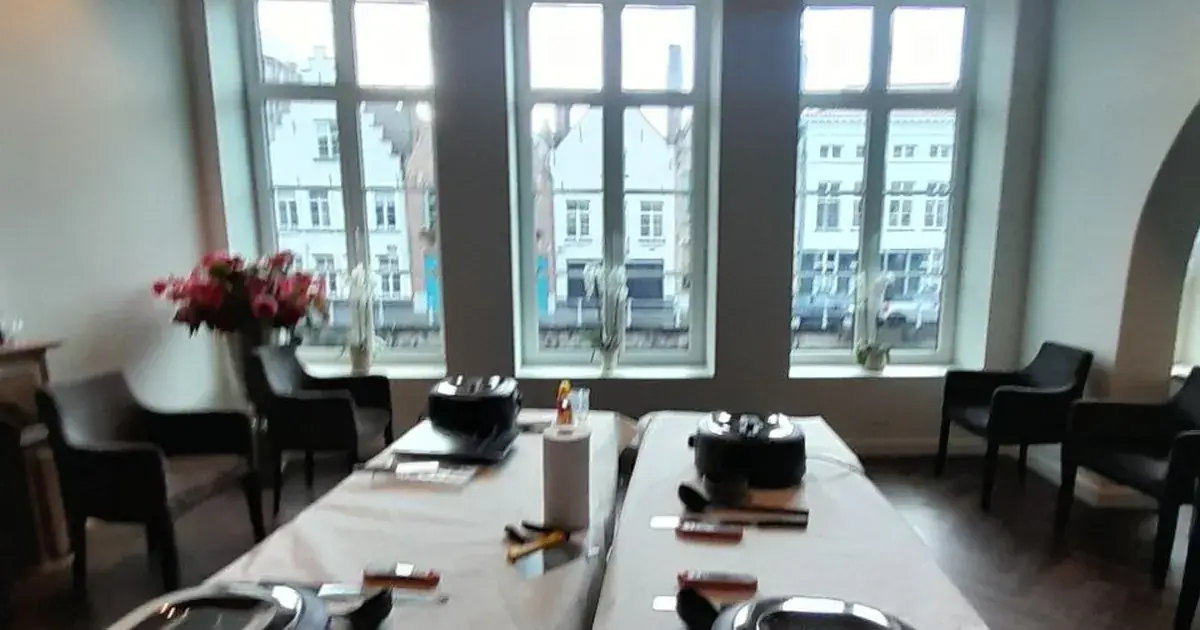
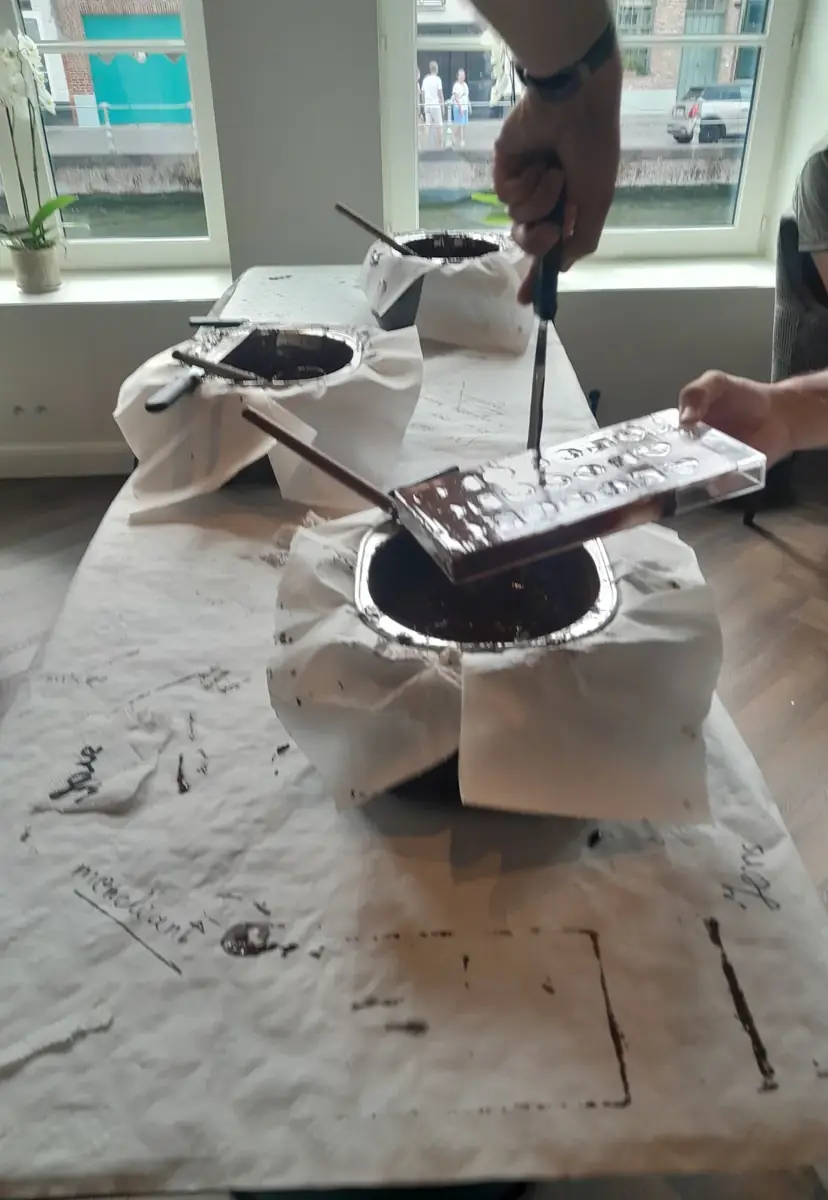
Join our 2-hour Belgian chocolate workshop in a historic building on the Sint-Annarei canal. Temper chocolate, fill and decorate pralines, drink a real hot chocolate, and take home 21 pralines and 6 mendiants you made yourself. No experience needed, ages 12+.
How many days do you need in Bruges?
One full day covers the highlights (follow our Bruges in one day walking route). Two days let you add museums, a brewery, the windmills and the quiet districts. Stay one night if you can: Bruges is at its most beautiful in the evening and early morning, after the day-trippers leave.
Frequently asked questions
Is Bruges worth visiting?
Yes. It is one of the best-preserved medieval cities in Europe, very walkable, and only about an hour by train from Brussels.
What is Bruges famous for?
Its canals, medieval architecture, the Belfry, Flemish primitive paintings, lace, beer and Belgian chocolate.
What can I do in Bruges for free?
Walk the canals, visit the Beguinage courtyard, Burg Square, the Lake of Love, the windmills on the ramparts and the markets. Many churches are free to enter.
What is the best time to visit Bruges?
April–June and September–October for pleasant weather and fewer crowds; late November to early January for the Christmas markets.
